
Blog

Will Trustee Find Out About a 401k Loan?
Yes, the trustee is absolutely going to find out about your 401(k) loan. This isn't something to panic about; it's just a standard part of the bankruptcy process. In fact, full and honest disclosure is not only required but is your best strategy for making sure everything goes smoothly.
Yes, the Trustee Will Discover Your 401k Loan
If you're asking, “Will the trustee find out about my 401k loan?” let me be direct: the answer is a resounding yes. They almost always do.
Bankruptcy trustees aren’t private investigators relying on hunches. They are administrators who systematically review the documents you provide under oath—your bankruptcy schedules, pay stubs, and retirement plan statements. For example, your pay stubs usually have a clear, separate line item showing the loan repayment being deducted from each paycheck. It’s one of the first things a trustee will see when reconciling your documents.

Think of the trustee's job as getting a complete, accurate picture of your finances. They aren't trying to catch you in a "gotcha" moment. Their process is methodical and relies on a paper trail that a 401(k) loan inevitably leaves behind. For more on how trustees verify this information, you can find helpful resources at The Bankruptcy Law Firm.
The Clear Paper Trail of a 401k Loan
Trying to hide a 401(k) loan is not just risky; it's practically impossible. The discovery isn't a matter of if, but how. The trustee will review several key documents where your loan is visible, making it an easy find.
So, how exactly does a trustee spot the loan? It’s pretty straightforward. They look at the standard financial documents you’re required to submit.
How a Trustee Identifies Your 401k Loan
This table breaks down the primary documents and methods a trustee uses to identify an outstanding 401(k) loan.
| Document or Method | What the Trustee Looks For |
|---|---|
| Pay Stubs | A clear line-item deduction for "401k Loan" or similar wording, showing automatic repayment from each paycheck. |
| Bankruptcy Schedules | You must list the loan repayment as a monthly expense on your budget forms (Schedules I and J). |
| 401(k) Plan Statements | These statements show the original loan amount, the outstanding balance, and the repayment terms. |
| Bank Statements | Sometimes, loan proceeds are deposited into your bank account, creating a record of the initial transaction. |
This paper trail is why trying to conceal the loan is a bad idea. It's all right there in black and white.
The key takeaway here is simple: transparency is your ally. Disclosing the loan upfront prevents complications, builds trust with the trustee, and allows your attorney to correctly position it within your bankruptcy case from the very start.
This initial disclosure sets a calm, cooperative tone for the entire process. It also ensures your retirement savings are properly handled and protected under the law, which is the ultimate goal.
Understanding the Trustee’s Role and Your Financial Paper Trail
To get why a 401(k) loan is nearly impossible to hide, you have to see things from the trustee’s point of view. A bankruptcy trustee isn't some detective trying to catch you in a lie. Think of them more like a meticulous administrator whose job is to get a complete and accurate financial picture. Their legal duty is to make sure the process is fair for everyone involved.
This duty means they have to follow a clear and unavoidable paper trail—a trail your 401(k) loan leaves all over your financial documents. They aren’t guessing or looking for trouble; they are simply connecting the dots that already exist in your paperwork.
Following the Financial Breadcrumbs
The discovery process is systematic, not random. Trustees almost always dive into pay stubs first, where payroll deductions for loan repayments are a dead giveaway. That little line item is something trustees are trained to look for in every single case.
From there, they cross-reference everything. They’ll match those pay stub deductions with your bank statements, your W-2s, and the 401(k) plan statements that show the outstanding loan balance. This cross-verification makes hiding the loan an incredibly risky strategy that almost never works. Each document confirms the others, creating a web of evidence that points directly to the loan.
Key Documents Trustees Scrutinize
Several key documents paint a clear picture of your financial life for the trustee. When it comes to a 401(k) loan, these are the primary sources they will examine:
-
Your Pay Stubs: This is often the first and most obvious clue. The line-item deduction for a "401k Loan Repayment" is a clear indicator that a loan exists.
-
Official Bankruptcy Schedules: You are legally required to list all your assets, debts, income, and expenses. The loan repayment must be listed as a monthly expense on your budget (Schedules I and J).
-
Retirement Plan Statements: Your quarterly or annual 401(k) statements will explicitly show the outstanding loan balance, the original loan amount, and the repayment terms.
-
Bank Account Statements: The initial deposit of the loan funds into your bank account creates a clear transaction record that trustees can easily spot during their review.
The trustee's role is not to penalize you for having a 401(k) loan but to ensure all financial activities are accounted for. Honesty and transparency are not just ethical obligations; they are practical necessities for a smooth bankruptcy process.
By understanding the documents they review and their duty to verify everything, you can see why disclosing your loan from the start is the only logical path forward. To get a better sense of their responsibilities, you can learn more about the role of a bankruptcy trustee in our detailed guide. This proactive approach helps your case proceed without unnecessary delays or complications.
How a 401(k) Loan Is Treated in Chapter 7 vs. Chapter 13 Bankruptcy
Once a trustee knows you have a 401(k) loan, what happens next depends entirely on the type of bankruptcy you file. The two main paths for individuals, Chapter 7 and Chapter 13, handle these loans in completely different ways. Getting this distinction right is key to knowing what to expect for your financial future.
Think of it like this: Chapter 7 is about a quick, clean slate by liquidating non-essential assets. Chapter 13, on the other hand, is a longer-term reorganization plan. That fundamental difference is what drives how your 401(k) loan repayment fits into the picture.
Chapter 7 Bankruptcy: The Liquidation Path
In a Chapter 7 case, the main goal is to wipe out unsecured debts like credit cards and medical bills as fast as possible. Because there’s no repayment plan, the way your 401(k) loan is handled is pretty straightforward.
You absolutely must disclose the loan and the payroll deduction on your paperwork. However, the 401(k) account itself is almost always protected by federal and Georgia state exemptions, meaning the trustee can't touch the money in it. The loan repayment itself doesn't really become a major factor in whether your case succeeds or fails.
This is how a trustee puts the puzzle pieces of your financial life together, which is the first step no matter which chapter you file.
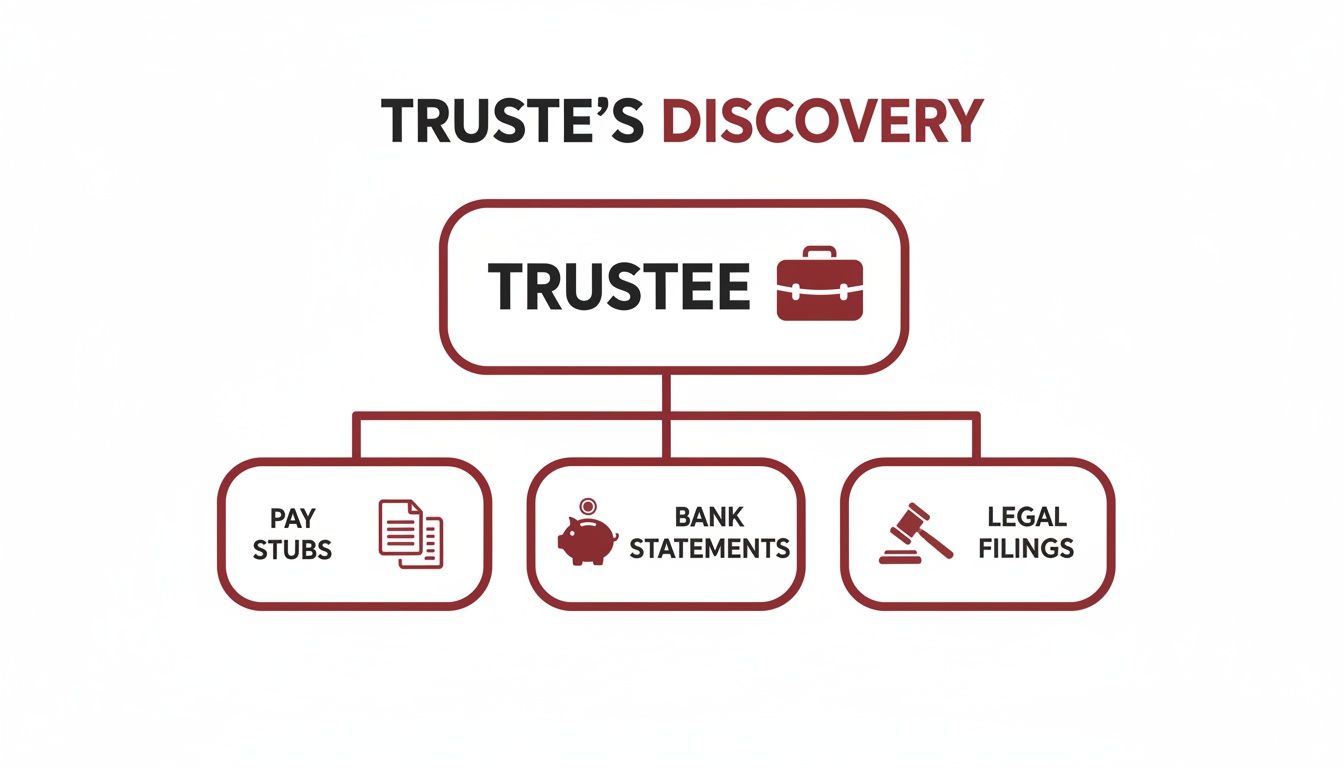
The key takeaway here is that discovery isn't guesswork; it's a systematic review of documents that cross-reference each other. That’s why hiding things is never a good idea.
Most people filing Chapter 7 just keep making their 401(k) loan payments to avoid the nasty tax penalties that come with a default. Since you’re essentially paying yourself back, this action doesn't usually raise any red flags with the trustee.
Chapter 13 Bankruptcy: The Reorganization Path
Chapter 13 bankruptcy is a completely different ballgame. This process involves creating a 3-to-5-year repayment plan based on your disposable income. Here, your 401(k) loan repayment becomes a critical piece of the financial puzzle.
In most places, including right here in Georgia, the courts let you continue making your 401(k) loan payments. That repayment is treated as a necessary monthly expense, almost like your mortgage or car payment.
This is a huge advantage of Chapter 13. By including the loan payment in your budget, you’re effectively putting your own retirement savings first while you restructure your other debts. The court sees this as you repaying yourself, not unfairly hiding money from your other creditors.
Your entire repayment plan is built around this deduction. That means the amount you pay to other creditors each month is calculated after your 401(k) loan payment has been accounted for. For a deeper dive, you can learn more about what happens to 401k accounts and loans after bankruptcy in our detailed guide.
But there's one critical detail you can't afford to miss:
- The "Step-Up" Provision: If you pay off your 401(k) loan before your Chapter 13 plan is over, the trustee will almost certainly require you to "step up" your plan payments. The money that was going toward your loan must now be redirected to your unsecured creditors for the rest of the plan's term.
Forgetting to account for this step-up can get your plan rejected by the court. A good bankruptcy attorney will structure your plan to include this future change from day one, ensuring a smooth process that helps you rebuild your finances without sacrificing your retirement.
Comparing 401(k) Loan Treatment in Chapter 7 and Chapter 13
To make it even clearer, let's break down the key differences side-by-side. How your 401(k) loan is viewed can drastically change the outcome of your bankruptcy.
| Aspect | Chapter 7 (Liquidation) | Chapter 13 (Reorganization) |
|---|---|---|
| Primary Goal | Discharge unsecured debts quickly. | Restructure debts into a 3-5 year repayment plan. |
| Loan Repayment | Optional but recommended to avoid tax penalties. Payments don't impact the case outcome. | Permitted and treated as a necessary expense in your budget. |
| Impact on Disposable Income | Not applicable, as there is no repayment plan based on income. | The loan payment reduces your calculated "disposable income," lowering payments to other creditors. |
| Trustee's View | Generally viewed as paying yourself back and is not a major concern. | Seen as a legitimate expense, but requires a "step-up" in plan payments once the loan is paid off. |
| Benefit to You | Allows you to continue saving for retirement without disrupting your bankruptcy discharge. | Protects your retirement savings while allowing you to catch up on other secured debts like a house or car. |
As you can see, Chapter 13 offers a strategic advantage by letting you prioritize paying yourself back. However, it comes with the long-term commitment and the step-up requirement, whereas Chapter 7 is a much simpler, though less flexible, process regarding these loans.
The Serious Risks of Not Disclosing Your 401k Loan
Thinking you can just leave your 401(k) loan off your bankruptcy paperwork is a huge gamble. It might seem like a small detail that nobody will notice, but failing to disclose it can completely wreck your entire case. The consequences aren’t just minor paperwork issues; they can get your case thrown out or even lead to serious legal penalties.
This isn’t about making a simple mistake. When you file for bankruptcy, you’re legally required to give a complete and honest picture of your finances. Intentionally hiding debts, assets, or other financial obligations is a major violation of that duty.
Dismissal of Your Bankruptcy Case
The first and most immediate risk is that the trustee will file a motion to dismiss your case. If the judge agrees, you lose all the protections that bankruptcy provides.
That means the automatic stay—the thing that stops creditor calls, wage garnishments, and foreclosures—is lifted immediately. You’re thrown right back to where you started, only now you’ve wasted time and money on a failed bankruptcy filing. You might be able to refile, but it causes huge delays and a lot more headaches.
Denial of Your Debt Discharge
Even if your case isn't dismissed right away, a judge can still deny your discharge. This is pretty much the worst-case scenario. A discharge is the court order that officially wipes out your eligible debts—it’s the entire reason you’re filing for bankruptcy in the first place.
Without a discharge, you’re still legally on the hook for all your debts, but you might have already lost non-exempt assets in the process. It's like running a marathon only to be disqualified right at the finish line.
Accusations of Bankruptcy Fraud
In the most extreme cases, deliberately hiding financial information can be considered bankruptcy fraud. This isn't just a slap on the wrist; it's a federal crime that comes with some very stiff penalties, including:
-
Heavy Fines: The court can hit you with substantial financial penalties, piling on even more debt.
-
Prison Time: While it’s not common for simple omissions, serious cases of intentional fraud can absolutely lead to time behind bars.
These outcomes really drive home why total honesty is non-negotiable in bankruptcy. Wondering "will the trustee find out about my 401(k) loan?" is the wrong question. The real issue is that you are legally required to disclose it, period. Working with an experienced attorney ensures every single detail is reported correctly, protecting you from these devastating pitfalls and keeping you on the path to financial recovery.
Using Legal Exemptions to Protect Your Retirement Savings
Finding out that your bankruptcy trustee will definitely know about your 401(k) loan can be unnerving. It’s a completely normal reaction to worry that by disclosing the loan, you’re putting your entire retirement nest egg on the line. But here’s the critical piece of good news you need to hear: the law is overwhelmingly on your side.
Both federal and Georgia state laws offer powerful legal shields called exemptions, and they are specifically designed to protect your retirement accounts from creditors and the trustee. This means that even though you must disclose the loan, the actual funds sitting in your 401(k) are almost always untouchable. The whole point of these laws is to make sure you have a secure financial future after your bankruptcy case is finished.
The Power of Exemptions
Think of an exemption as a legal force field. It tells the bankruptcy court that certain assets are off-limits and can’t be used to pay your debts. When it comes to qualified retirement plans like a 401(k), that force field is incredibly strong.
Here’s the key takeaway: disclosing your 401(k) loan does not give the trustee the right to take your retirement savings. The two things are separate. The trustee needs to know about the loan to get a complete picture of your finances—specifically your monthly income and expenses. The retirement account itself, however, stays protected. For a deeper dive, you can learn more about how exemptions allow debtors to keep assets right here on our blog.
The system isn't designed to leave you with nothing. On the contrary, bankruptcy law recognizes how vital retirement savings are and provides a solid legal framework to protect them for your future.
Why Your Disclosure Matters
Even with these strong protections in place, full disclosure is non-negotiable. While your 401(k) loan won’t show up on a credit report, it leaves a clear trail on the very documents the trustee is required to review.
Your pay stubs will show the repayment deductions, which trustees look at in every single case. Your plan statements will reveal the loan balance. Trying to hide it is a losing game—and a dangerous one. When an omission is discovered, it creates major problems and can even jeopardize your entire case.
By being transparent from the start, you allow your attorney to properly apply the correct exemptions. This ensures your case moves forward smoothly and, most importantly, keeps your hard-earned retirement savings safe and sound.
Your Next Steps for Disclosing a 401k Loan Correctly
Okay, so the trustee is going to find out about your 401(k) loan. That isn't the end of the world—in fact, knowing this upfront puts you in the driver's seat. Instead of worrying, you can get ahead of the process by taking a few straightforward steps.
This isn't about hiding anything; it's about being prepared. By rounding up the right documents now, you and your attorney can present a clear, honest financial picture right from the start.

Create Your Documentation Checklist
Your first move is simple: gather the paperwork. Having everything ready to go will make life much easier for you and your attorney and helps avoid any last-minute panic.
Here’s a quick checklist to get you started:
-
Recent 401(k) Plan Statements: Pull the last few statements you’ve received. They’ll show the loan balance, the original amount, and your repayment terms.
-
Pay Stubs: Grab your pay stubs from the last six months. The trustee will look at these to confirm the automatic loan payments are being deducted from your paycheck.
-
Loan Agreement: If you can find it, get the original loan document from your plan administrator. It has all the fine print and specific terms of your loan.
Once you have these documents, your attorney has what they need to fill out your bankruptcy schedules accurately and completely.
Transparency is your best friend in a bankruptcy case. Handing over all your documents upfront shows the trustee you're being honest, which helps your case move along smoothly. It also allows your attorney to use every available protection for your assets.
Getting this organized also helps you feel more in control as you head into the next part of the process: the Meeting of Creditors.
Prepare for the Meeting of Creditors
The Meeting of Creditors, also called the 341 hearing, is a standard part of every bankruptcy case. It’s where the trustee will ask you questions under oath about the information you filed. Since you’ve already disclosed the 401(k) loan, you can bet they’ll ask about it.
Don't sweat it. Your attorney will go over everything with you beforehand, but the questions are typically very simple. The trustee will probably just want you to confirm the loan exists and that the repayment amount on your forms matches what's on your pay stubs.
Because you’ve already given them all the proof, this part feels more like a quick confirmation than a tough interrogation. Taking these steps ahead of time makes the whole experience much less stressful.
Common Questions About 401k Loans and Bankruptcy
To wrap things up, let's tackle a few of the most common questions people have when they're juggling a 401k loan and the possibility of bankruptcy. Getting straight answers can help you avoid making a tough situation even worse.
Can I Take Out a 401k Loan Right Before Filing for Bankruptcy?
I get this question a lot, and the short answer is: don't do it. Taking a 401k loan right before you file is a huge red flag for the bankruptcy trustee. They'll almost certainly see it as a bad-faith move to either take on new debt you can't repay or improperly hide cash from your creditors.
Think of it from the trustee's perspective. You're about to declare you can't pay your debts, yet you just borrowed a lump sum from your own retirement. It looks like you're trying to convert non-exempt cash into a protected retirement asset. This kind of last-minute financial maneuvering can lead to serious problems, including objections from the trustee or even having your entire bankruptcy discharge denied. Always, always talk to a bankruptcy lawyer before making any big financial moves.
Will I Have to Stop Repaying My 401k Loan During Chapter 13?
No, you almost always get to keep paying back your 401k loan during a Chapter 13 bankruptcy. In fact, the court usually prefers it. Those payments are treated as a standard monthly expense when your lawyer calculates your disposable income, which is the key number used to figure out your repayment plan for other creditors.
Why is this allowed? Because you're essentially paying yourself back and securing your own retirement. The court sees this as responsible financial planning. Your attorney will make sure your 401k loan payment is properly listed and accounted for in your Chapter 13 plan.
Heads up: If you finish paying off that 401k loan while you're still in your Chapter 13 plan, you'll need to tell your attorney right away. The money that was going toward your loan will now have to be redirected into your plan to pay your other unsecured creditors.
What if I Default on My 401k Loan During Bankruptcy?
If you stop paying your 401k loan and it goes into default, the IRS typically treats the outstanding balance as a taxable distribution. This means you could be on the hook for income taxes on that amount, plus a 10% early withdrawal penalty.
While a default doesn't automatically sink your bankruptcy case, it definitely complicates things. The loan effectively vanishes, which means your disposable income calculation for a Chapter 13 plan changes. With that loan payment gone, you'll likely have to pay more to your other creditors each month. The most important thing is to tell your attorney the moment your loan status changes so they can adjust your plan and avoid any trouble.
Facing financial uncertainty can feel like you're navigating a maze in the dark. You don't have to do it alone. The experienced attorneys at Morgan & Morgan Attorneys at Law P.C. can shine a light on the process, helping you protect what you've worked for and find the best path to a fresh start. Contact us today for a free consultation to understand all of your options.

Lee Paulk Morgan
With more than 41 years of experience in the areas of Bankruptcy, Disability, and Workers’ Compensation, Lee Paulk Morgan is one of the most respected Bankruptcy and Disability attorneys in Athens, Georgia. His tireless dedication to serving clients has gained him the reputation of a premier attorney in his areas of practice, as well as the trust and respect of other legal experts, who often refer clients to him.
SHARE
RELATED POSTS

Do Employers Have To Notify Employees Wage Garnishment Georgia: 2026 Guide
Let's get straight to the point: do employers have to notify employees about wage garnishment in Georgia? The short answer is no. Under Georgia law, your employer doesn’t have to give you a separate heads-up…

What Is Cram Down In Bankruptcy: A Georgia Debtor’s Guide
A cram down is one of the most powerful tools you have in a Chapter 13 bankruptcy. It can force a lender to reduce your loan balance to match the property's current value. It basically…