
Blog

Do You Get Drug Tested For Workers Comp in Georgia
No, you are not automatically drug tested after a workplace injury in Georgia. An employer with a qualifying drug-free workplace program can require testing after a lost-time injury, and the result can create a rebuttable presumption that affects your workers’ compensation benefits.
You’re in an Athens warehouse, construction site, restaurant, or delivery job. You get hurt, report the accident, and expect medical treatment. Instead, your supervisor tells you to provide a urine, blood, breath, or other sample. Then someone mentions that a positive result could cost you your claim.
That fear is understandable, but the simple question, “Do you get drug tested for workers comp?” has no universal yes-or-no answer in Georgia. Filing a workers’ compensation claim doesn’t automatically trigger a drug screen. The answer usually turns on your employer’s written policy, the facts surrounding the accident, and whether the employer participates in Georgia’s statutory drug-free workplace program.
You need to treat the test seriously without assuming the result decides everything. The timing of the test, the testing method, the chain of custody, any lawful prescription, the cause of the accident, and whether the employer applied its policy consistently can all matter.
What to Expect After a Workplace Injury in Georgia
An injured worker in an Athens warehouse may face a post-accident drug test before understanding what the request means. After reporting a shoulder injury from moving a heavy box, the worker may receive medical instructions and a testing request in the same day. That can feel punitive, especially when unsafe equipment or another employee’s mistake caused the accident.
Report the injury promptly and in writing. Describe the event accurately, ask where the employer wants you to receive medical care, and keep copies of the accident report, messages, emails, doctor instructions, and testing directions. A clear record helps counter later claims that the injury did not happen at work.
Ask the employer why it wants a sample and request the written policy. Under Georgia Code § 34-9-415, employers generally aren’t legally required to maintain a drug-testing program. They may establish workplace rules about drug use and may operate a qualifying drug-free workplace program with testing requirements.
Three questions usually control the practical analysis:
- The written policy: Does it require testing after an injury, especially one involving lost work time?
- The accident circumstances: Did the employer identify reasonable suspicion, observed impairment, or facts suggesting drug use contributed?
- The program’s legal status: Does the employer operate a qualifying statutory drug-free workplace program?
Filing a workers’ compensation claim itself does not order a drug test. The employer’s policy and the accident circumstances usually explain the request.
A lost-time injury may trigger testing under a policy even when a minor incident would not. Ask for the policy and any written notice given to employees or applicants. For broader background, read this guide to four important things to know about workers’ compensation in Georgia.
State rules differ. Massachusetts workers comp help from Melanson Law addresses that state’s process, but Massachusetts rules do not control an Athens claim. Preserve every document and do not refuse testing without legal advice, because the refusal itself may affect your position.
Georgia Drug Testing Rules for Injured Workers
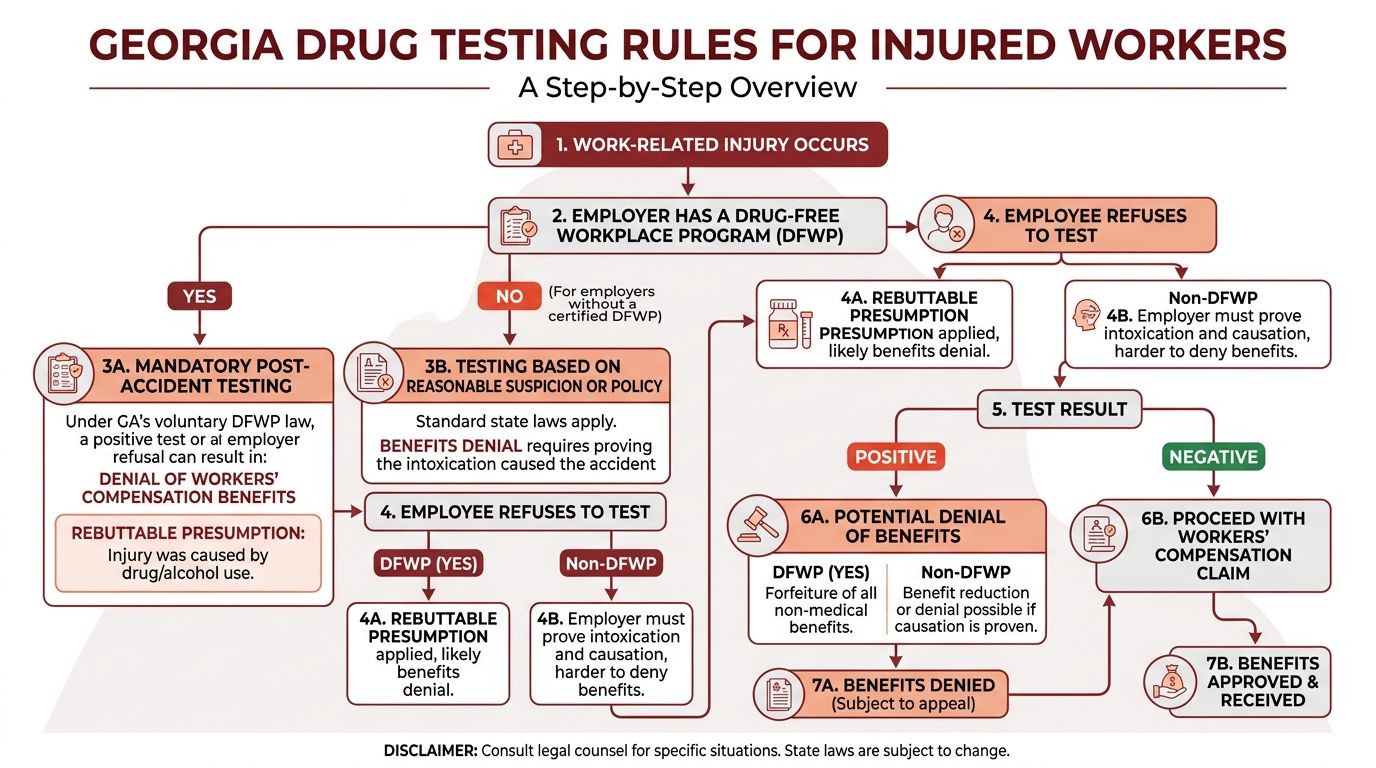
You leave an Athens jobsite after an injury, and your supervisor sends you for a drug test. That request does not automatically mean Georgia law required testing or that your workers’ compensation claim is lost. The employer’s written program, the reason for testing, and the required notice determine what happens next.
Georgia Code § 34-9-415 does not require every Georgia employer to drug test injured workers. It allows employers to establish drug-testing programs and reasonable workplace rules. A qualifying drug-free workplace program may require testing in defined situations, including:
- An on-the-job injury that causes lost work time.
- Reasonable suspicion of drug use.
- A routinely scheduled fitness-for-duty examination.
- An employee’s return from drug rehabilitation after a positive test.
Start with the written policy. It should tell employees what triggers testing and what procedures the employer will follow. Georgia law also requires prior written notice to employees and applicants about the testing program, along with a written policy explaining its terms.
Employers that began a substance-abuse testing program after July 1, 1993 generally had to provide at least 60 days’ advance notice before testing began, as described in Georgia Code § 34-9-415. That history matters if the employer claims a policy existed but cannot show that workers received notice.
What you should request
Ask for the policy in writing, not just a supervisor’s explanation. Request the provision requiring testing after your accident, proof that the employer gave you the policy or notice, and any document classifying the injury as lost-time or stating the basis for reasonable suspicion.
A testing policy authorizes a request. It does not automatically decide whether benefits are payable. The positive or refused test must still be examined under Georgia’s causation rules and the procedures used to collect and analyze it. This guide to workers’ compensation and drug testing explains related workplace-policy issues.
Follow this decision path: obtain the policy and notice, preserve the test records, and get legal advice before signing statements or refusing a test. The fact that you filed a claim alone does not answer whether testing was proper.
How a Positive Test Can Affect Your Workers Comp Benefits
A positive test creates a legal problem, but it doesn’t automatically end your claim. Georgia Code § 34-9-17 creates a rebuttable presumption, meaning the law may initially presume that alcohol or drugs caused the injury, while allowing the worker to present evidence challenging that conclusion.
The alcohol rule uses a specific test window and threshold. If chemical analysis within three hours of the accident shows a blood-alcohol concentration of 0.08 or more, Georgia law creates a rebuttable presumption that alcohol caused the accident and injury.
The controlled-substance rule works differently. If any amount of marijuana or a controlled substance is detected in blood, urine, breath, or another bodily substance within eight hours of the alleged accident, the statute creates a similar rebuttable presumption about causation, subject to statutory exceptions such as lawful prescription use. An unjustified refusal to submit to a reliable, scientific test can also trigger the presumption. See Georgia Code § 34-9-17.
| Substance | Detection Window | Threshold | Presumption | Key Exception |
|---|---|---|---|---|
| Alcohol | Within three hours of the accident | Blood-alcohol concentration of 0.08 or more | Alcohol caused the accident and injury | The worker may rebut the presumption |
| Marijuana or a controlled substance | Within eight hours of the alleged accident | Any amount detected in a bodily substance | The substance caused or contributed to the injury | Lawful prescription use and other statutory exceptions |
Causation is the fight
The presumption concerns what caused the injury, not merely whether a substance was present. A positive result can shift the practical burden onto you, but you can respond with evidence showing that the substance didn’t cause or contribute to the accident.
That evidence might include the mechanics of the accident, witness accounts, surveillance footage, equipment defects, work assignments, medical records, prescription documentation, and testimony from a treating physician. A lawful prescription taken as directed is especially important because Georgia law expressly recognizes that exception. If a medication is relevant, you may also need a plain-language medical explanation of its potential effects. An overview of Suboxone side effects can help explain why medication history should be handled accurately and medically, not casually.
A refused test presents a separate risk. If the refusal was unjustified and the test was reliable and scientifically conducted, Georgia law can apply the same rebuttable presumption. Don’t assume that refusing is safer than testing. Get legal advice quickly, document what you were told, and preserve any reason you had for questioning the request or procedure.
OSHA and the Procedures That Make a Test Stick
Federal OSHA rules don’t require every workers’ compensation claimant to take a drug test. OSHA permits post-incident testing when the employer has an objectively reasonable basis to believe drug use could have contributed to the injury or illness. Testing designed to punish an employee or discourage injury reporting is restricted.
That distinction matters in Athens workplaces. An employer should be investigating the incident, not automatically treating the injured worker as the cause. OSHA’s interpretation also indicates that an employer should test all workers who could have contributed to a serious incident, rather than selectively testing only the person who reported the injury.
Audit the procedure, not just the result
A laboratory result isn’t the entire evidentiary record. Georgia rules require proper custody, testing, and confirmation procedures before a drug result becomes determinative under the applicable workers’ compensation adjudication rule. That means the handling of the specimen can matter as much as the reported substance.
Preserve these records:
- Accident report: Get the report you submitted and any version prepared by management.
- Test request: Keep the written instruction, time of the request, location, and reason given.
- Collection details: Record when and where the sample was collected and who handled it.
- Laboratory result: Request the complete report, not just a verbal statement that you “failed.”
- Chain-of-custody records: Look for documentation showing each transfer and handling step.
- Comparison evidence: Identify whether coworkers involved in the same incident were tested.
A selective test can be important. If several workers could have contributed to a serious incident but only the injured employee was tested, that inconsistency may support an argument that the test was retaliatory or improperly applied. It doesn’t erase the result by itself, but it gives your attorney and the State Board a factual basis to question the employer’s process.
Don’t sign a statement saying the test proves impairment unless you understand exactly what you’re signing. Ask for documents first and keep your description of the accident focused on observable facts.
A Real-World Walkthrough of a Positive Test in a Georgia Claim
An Athens warehouse worker strains his back lifting a damaged pallet. He reports the accident before leaving, follows the employer’s direction to an approved physician, and provides a sample under the company’s drug-free workplace policy.
The worker tells the testing facility about a lawfully prescribed muscle relaxant. The laboratory reports a positive result, and the insurer sends a denial letter claiming drug use caused the injury. The worker assumes the claim is finished. It is not.
The decision turns on causation. The worker needs evidence showing what physically caused the injury, including the prompt accident report, photographs of the damaged pallet, coworker statements, prescription records, medical records, and the complete laboratory file. A proper chain of custody may establish that the sample was handled correctly. It does not establish that the medication caused the lifting accident.
What helps rebut the presumption
Build the explanation around the actual event:
- The accident mechanism: The pallet shifted before the back strain occurred.
- The medical timeline: The worker reported pain immediately and sought authorized care.
- The prescription record: The medication was prescribed, disclosed, and taken as directed.
- The workplace evidence: Coworkers or video support the account of the shifting load.
- Medical testimony: The treating physician explains the injury’s cause and whether the medication caused impairment.
Georgia law makes the drug-related causation presumption rebuttable. The issue is causation, not merely the presence of a substance in the sample. A legally prescribed drug taken according to the prescription is expressly excepted under Georgia Code § 34-9-17.
Where claims fall apart
Workers damage their own cases by delaying disclosure of a prescription, missing an independent medical examination, changing the accident account, or posting social media statements and photographs that conflict with claimed limitations. Those mistakes give the insurer arguments about credibility and compliance, regardless of the test’s chemistry.
Do not hide medication use from your lawyer or doctor. Provide the complete medication history, including prescriptions and over-the-counter products. Keep your account accurate, consistent, and limited to what you personally observed. Then have counsel compare the test result with the accident evidence, medical timeline, and statutory presumption before accepting a denial.
Appeals, Deadlines, and Your Right to a Hearing
A denial based on a drug test isn’t the end of the process. Georgia workers’ compensation disputes can proceed before the Georgia State Board of Workers’ Compensation, where an injured worker may request a hearing and present evidence challenging the denial or interruption of benefits.
Don’t wait while documents disappear. Workers’ compensation claims have filing deadlines, and the applicable deadline depends on the type of benefit or dispute involved. Because a missed deadline can affect your rights, have an attorney or the State Board confirm the deadline that applies to your specific injury rather than relying on general internet advice.
Build the hearing file
Gather the documents that show both how the accident happened and how the employer handled testing:
- Employer policy and notice: Obtain the written testing policy and proof of prior notice.
- Accident records: Preserve your report, witness names, photographs, video requests, and incident materials.
- Testing materials: Request the test order, collection time, laboratory report, confirmation result, and chain-of-custody records.
- Medication evidence: Collect prescriptions, pharmacy records, and the prescribing physician’s explanation.
- Medical records: Keep treatment notes, work restrictions, and opinions connecting the injury to the workplace event.
- Benefits correspondence: Save denial letters, payment notices, requests for information, and insurer communications.
A State Board hearing isn’t the same as a standard civil trial. The Board evaluates the evidence about the accident, the employer’s policy, testing reliability, causation, medical treatment, and the worker’s rebuttal. Your testimony must remain consistent, and your documents should support the same account.
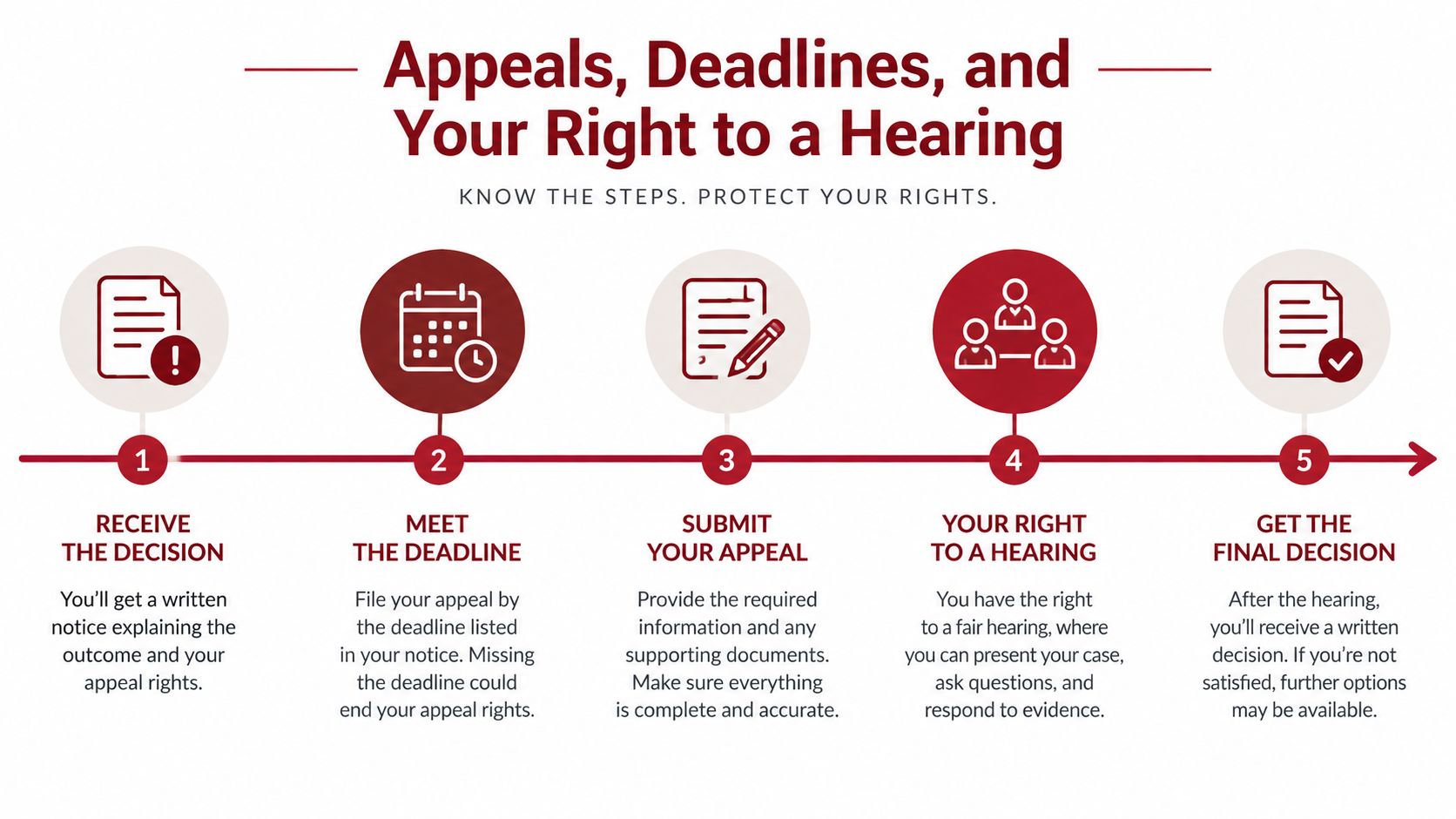
If the insurer denies the claim, request the appropriate hearing or other Board action promptly. Ask about obtaining an independent medical evaluation when the medical cause is disputed, and prepare a written timeline from the accident through the test, treatment, denial, and current condition. A clear timeline helps expose gaps between a positive result and the employer’s claim that the substance caused the injury.
Practical Next Steps and When to Call a Lawyer
Your first priority is preserving the claim, not arguing with the supervisor. Take these actions after a Georgia workplace injury:
- Report the injury in writing. State when, where, and how it happened, and keep proof that you reported it.
- Identify the approved physician. Ask the employer for the panel of physicians or authorized provider information.
- List medications accurately. Tell the testing facility and treating physician about prescribed and over-the-counter medications.
- Request testing documents. Ask for the policy, test request, collection details, laboratory result, and chain-of-custody records.
- Don’t refuse casually. An unjustified refusal of a reliable test can create the same rebuttable presumption discussed above. If you question the request, document the reason and seek legal advice immediately.
- Avoid waivers. Don’t sign a release, statement, or settlement document that you don’t understand.
Look for inconsistent policy enforcement. Ask whether other employees involved in the same incident were tested, whether the employer followed its own written policy, and whether the request was tied to reasonable facts or made solely because you reported an injury.
Call a workers’ compensation attorney if the insurer denies or partially denies the claim, points to a positive or refused test, stops wage benefits, disputes medical care, or schedules an independent medical examination. A lawyer can examine the policy, challenge causation, request testing records, prepare Board filings, and present medical and workplace evidence. Read whether you need a lawyer for workers’ compensation before deciding to handle a drug-testing dispute alone.
Morgan & Morgan Attorneys at Law P.C. in Athens handles Georgia workers’ compensation claims, including disputes involving testing and substance-use allegations. The firm offers free consultations, and its clients speak directly with attorneys who can help from the initial claim through a potential hearing.
If a post-injury drug test is threatening your Athens workers’ compensation benefits, contact Morgan & Morgan Attorneys at Law P.C. for a free consultation. Bring your accident report, employer policy, test records, prescription information, and any denial letter so an attorney can assess the causation and procedure issues immediately.

Lee Paulk Morgan
With more than 41 years of experience in the areas of Bankruptcy, Disability, and Workers’ Compensation, Lee Paulk Morgan is one of the most respected Bankruptcy and Disability attorneys in Athens, Georgia. His tireless dedication to serving clients has gained him the reputation of a premier attorney in his areas of practice, as well as the trust and respect of other legal experts, who often refer clients to him.
SHARE
RELATED POSTS

How Long Does It Take Workers Comp To Approve Surgery
In Georgia, when an authorized treating physician submits a complete Form WC-205 for surgical approval, the insurer has 5 business days to respond. If the insurer doesn’t respond within that period, the requested treatment is…

Can You Be Fired For Filing A Workers Compensation Claim
Georgia is an at-will state, but you can’t lawfully be fired specifically for filing a workers’ compensation claim. By 1920, 42 U.S. states had adopted workers’ compensation laws, yet proving that a termination was retaliatory…